
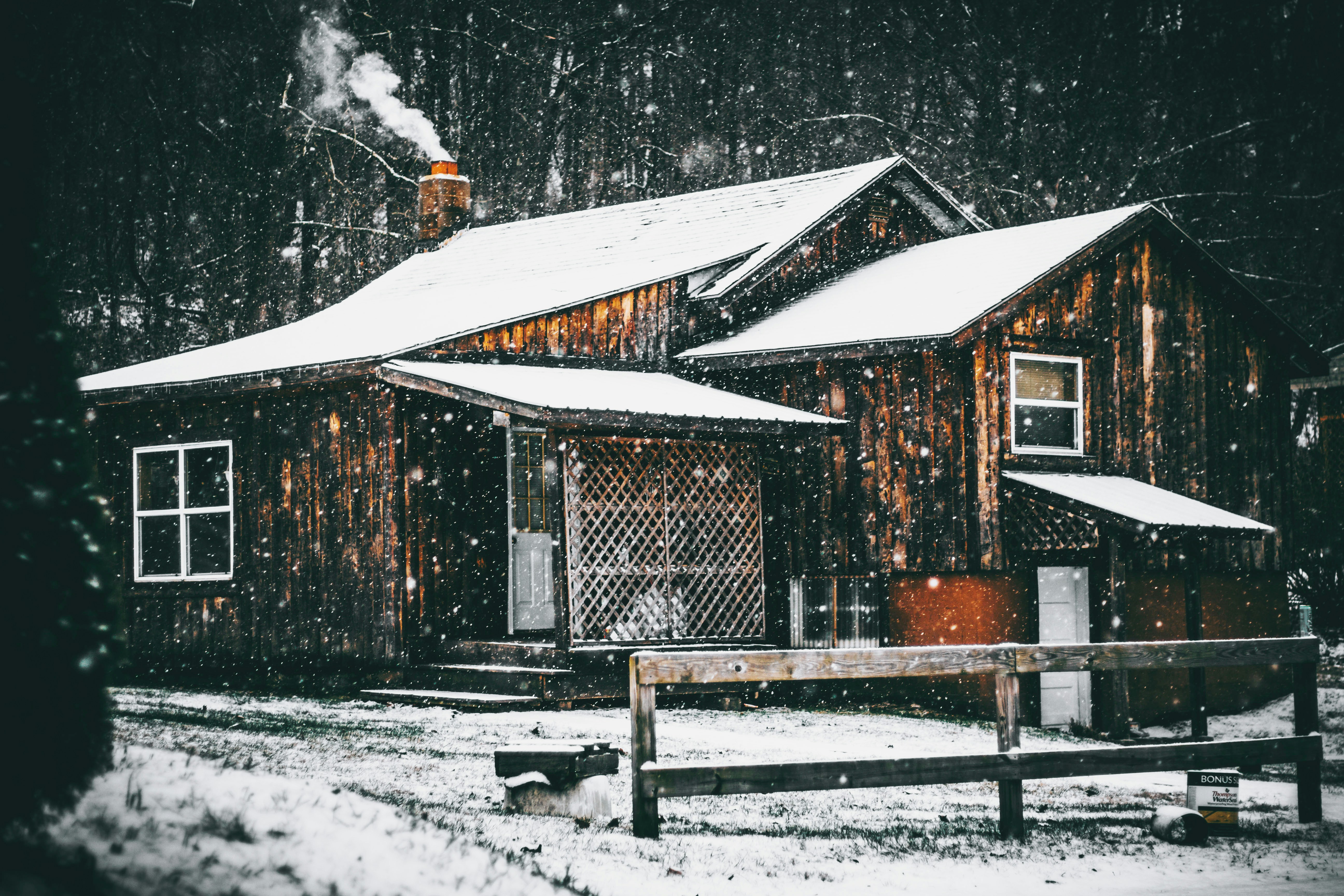
Winterizing a cottage or cabin comes down to one main job: making sure no water is left anywhere that it can freeze. Everything else, from the fridge to the gutters to the dock, is about arriving in spring to the place you left in the fall. This guide covers how to winterize a cottage or cabin step by step, the insurance condition that catches many owners, and a printable checklist. Whether you own a cottage, a cabin or a lake house, the steps are the same: this is how to winterize a vacation home that sits empty over winter.
This guide is for general information only. Every property, plumbing and heating system, and insurance policy is different, so check with a qualified plumber, heating contractor or your insurance broker before you winterize your own place.
First decision: drain it, or keep the heat on?
There are two ways to get a cottage through winter, and the steps depend on which one you choose.
- Close it up. Shut off the water, drain the system, and turn the heat down or off. This suits a seasonal cottage you won’t visit until spring.
- Keep it heated. Leave the heat on and the water running, and have someone check the property regularly. This suits a cabin you’ll use on winter weekends or rent to winter enthusiasts.
From experience: Our Whistler places were rented through the winter, peak season there, so we never closed them up. Our house rule was to set the heat to 15°C (59°F) whenever guests left. That’s safely above the 55°F (about 13°C) minimum the Red Cross recommends (described below), without paying to keep an empty place warm.
If you keep the heat on, the American Red Cross advises setting it no lower than 55°F (about 13°C) when you’re away. Keeping the heat on doesn’t remove the risk, though. If the power goes out or the furnace fails while nobody is there, pipes can freeze within hours in a hard frost. Angi puts it at about six hours below 20°F (-7°C), and sooner for exposed pipes.
Check your insurance conditions before you leave
Read the part of your policy on vacant or unoccupied homes before you close up. In Canada, the Insurance Bureau of Canada warns that most policies exclude frozen pipes and water damage when a home is vacant, even if you have the insurer’s permission for the vacancy. It advises shutting off the water and draining the lines in a vacant home.
A common condition (Square One’s, for example) is one of two things: shut off and drain the water, or have someone check daily that the heat is on. Check your own policy’s wording. How many days you can be away before the condition applies varies by insurer. Square One applies its condition once you’re away more than seven days; some insurers set the limit as low as four days. In a 2015 Square One survey, 91% of 1,200 Canadians didn’t know this condition existed.
In the US, standard homeowners policies (the ISO HO-3 form) cover freezing only if you used reasonable care to keep the heat on, or to shut off the water and drain the system. Whichever applies, ask your broker what your own policy requires, and keep a note of what you did and when. Our guide to vacation home insurance covers the other exclusions that catch second-home owners.
How to winterize a cottage or cabin, step by step
These steps assume you’re closing up for the season. If your cottage has a well, a septic system, a boiler or in-floor heating, have a plumber do the water steps the first time. Every system is plumbed differently.
- Shut off the water at the source. Turn off the main valve. If you have a well, switch off the pump’s own breaker (not the main breaker) and drain the pressure tank, following the Water Systems Council’s steps.
- Drain the lines. Open the highest tap in the building first, then the lowest tap or drain valve, so air can get in and the lines drain fully. Then open every other tap, hot and cold, including tubs and showers. Once the water stops, close the indoor taps. If some pipes won’t drain by gravity, have a plumber blow them out with compressed air.
- Drain the water heater. Turn off its power at the breaker, or its gas, before you drain it. The water may still be hot, so let it cool first. Close the cold-water supply to the tank, open a hot tap to let air in, then drain it through the drain valve, following the manufacturer’s instructions. When you reopen, refill the tank before turning the power or gas back on.
- Protect toilets and drains. Use only non-toxic RV or plumbing antifreeze (propylene glycol). Flush each toilet with the water off and soak up what’s left in the bowl. Then, following the Water Systems Council’s steps, pour about a gallon into each toilet tank and flush, and pour at least a quart into every sink, tub and shower drain. Never use car antifreeze: Angi notes that plumbing antifreeze is a different, non-toxic formula.
- Empty the appliances. Follow each appliance’s manual. For a washing machine, Whirlpool’s steps are typical: shut off the taps, disconnect and drain the inlet hoses, add about a quart (1 L) of RV antifreeze, run a short rinse and spin, then unplug it. Also drain the dishwasher and any fridge water line or ice maker. LG warns that a washer that freezes without being winterized is no longer under warranty.
- Close up outdoor water. Bring in, drain and store the hoses. Close the inside valve that feeds each outdoor tap first, then open the outdoor tap and leave it open, so any water left has room to expand (American Red Cross).
- Set the heat. If you’re leaving some heat on, set the thermostat and check it works. If you’re turning it off and have hot-water (boiler) heat, the boiler and radiators must be drained too: have a heating contractor do it.
- Clear out food and anything mice want. Empty the pantry. Unplug, empty and dry the fridge, then prop the door open so it can’t close. Store linens in sealed bins.
- Do the outside jobs. Clean the gutters, trim branches over the roof, and store or cover outdoor furniture.
- Put away the toys. Winterize boats, docks and gas-powered tools, or have a marina do the boat.
- Sort out access. Decide who can get in, and who nearby has a spare key.
- Walk through and take photos. Photograph valve positions, the thermostat and each room. That record helps the next opening and any insurance claim.
Locks and remote access
Rented cottages often use keypad or smart locks so guests and cleaners can get in without a key handoff. Cold is hard on them. Batteries lose power in the cold, and ice can stop the mechanism.
From experience: We had an electronic keypad lock that would sometimes fail in extreme cold. If you have one, make sure it also has a traditional key lock as a backup, and that someone nearby has the key.
Two more things help:
- Check the operating temperature before you buy. Some locks list it in their specs; TP-Link’s Tapo Smart Lock (DLW10), for example, rates its outside part to -30°C (-22°F).
- Ask about lithium batteries. Energizer rates its Ultimate Lithium AA batteries down to -40°C (-40°F). Check your lock’s manual first: some makers, such as igloohome, specify alkaline batteries only.
Winterizing checklist (printable)
| Area | Task | Done |
|---|---|---|
| Insurance | Read your policy’s rules for vacant or unoccupied homes; note who checks the property and how often | ☐ |
| Water | Main valve off. Well: pump breaker off (not the main breaker); pressure tank drained | ☐ |
| Water | Lines drained: highest tap first, then the lowest tap or drain valve, then all others; indoor taps closed once drained | ☐ |
| Water heater | Power or gas off before draining; cold supply closed, hot tap open, tank drained; refill before turning it back on | ☐ |
| Toilets and drains | RV/plumbing antifreeze only: about a gallon in each toilet tank, flushed; at least a quart in every drain | ☐ |
| Appliances | Washer, dishwasher, fridge water line and ice maker drained per each manual | ☐ |
| Outdoor water | Hoses drained and stored; inside valve closed first, then outdoor tap opened and left open | ☐ |
| Heat | Thermostat set and tested (no lower than 55°F / about 13°C), or system off; boiler heat drained by a pro | ☐ |
| Outage plan | Someone nearby can restore heat, or shut off and drain the water, if the power or furnace fails | ☐ |
| Kitchen | Food out; fridge unplugged, emptied, dried and propped open so it can’t close | ☐ |
| Pests | Linens in sealed bins; gaps around pipes sealed | ☐ |
| Exterior | Gutters cleared; branches over the roof trimmed; outdoor furniture stored or covered | ☐ |
| Toys | Boat, dock and gas tools winterized | ☐ |
| Access | Keypad batteries changed; spare key with someone nearby | ☐ |
| Record | Photos of valve positions, thermostat and each room | ☐ |
Print it: download the one-page winterizing checklist (PDF) and tick it off as you go.
How much does it cost to winterize a cottage?
Most owners do it themselves for the price of antifreeze and pipe insulation. Hiring help costs more. Angi puts the cost to winterize a house at $50 to $1,500 (US), and complex jobs can run $1,000 or more. A cottage with a well, a septic system or boat and dock work will sit toward the top of that range. But compare that with a burst pipe found in April.
FAQ
What temperature should I leave my cottage at over winter?
If you keep the heat on, the American Red Cross says no lower than 55°F (about 13°C). Check your insurance policy too, since some set their own minimum.
Do I need to winterize if I use the cabin in winter?
Yes, in part. Between visits you still need heat that stays on, someone checking it, and a plan for a power outage or furnace failure: someone who can get there quickly to restore the heat, or to shut off and drain the water, as the Insurance Bureau of Canada advises. Insurers such as Travelers suggest shutting off the main water valve when you’ll be away for a while, even with the heat on, so a burst pipe can’t keep flooding.
Can I just turn the heat off and leave the water on?
No. Once the heat is off, any water left in the pipes can freeze and split them. And most policies won’t pay for that damage if the property was vacant.
