
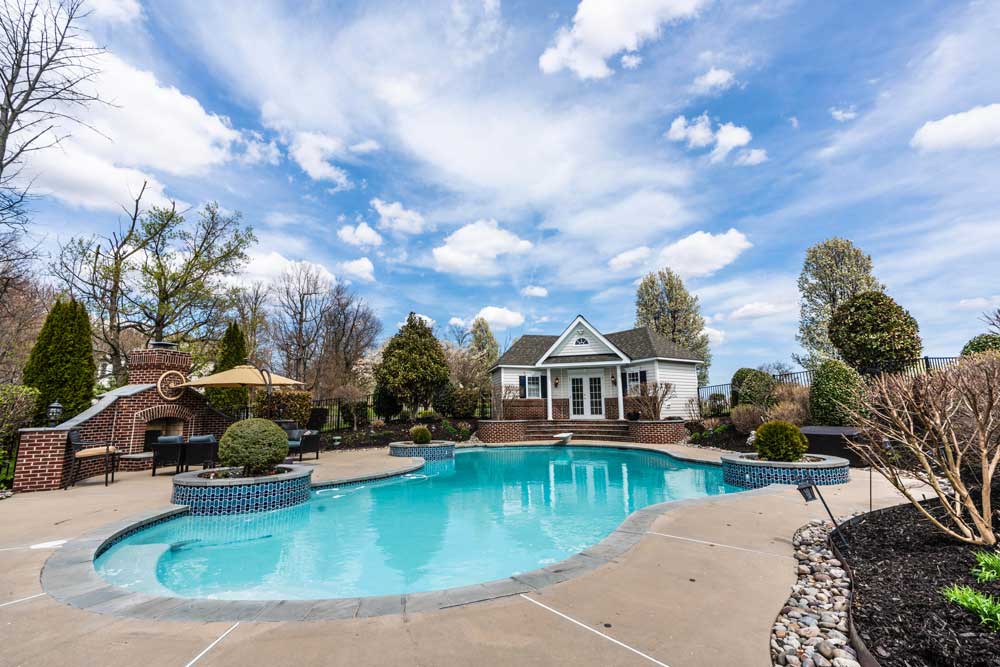
The difference between a second home vs investment property comes down to how you use it. A second home, such as a vacation home or cottage, is somewhere you live for part of the year. An investment property is held mainly to earn rental income or a profit on resale. So is a vacation home an investment property? In everyday terms it often is, but lenders and tax authorities draw the line more precisely, and which side you land on changes your down payment, your interest rate and your tax bill.
This guide covers how lenders and tax authorities in the US and Canada tell the two apart, whether you can rent out a second home, and what changes if you convert your second home to a rental property later.
Second Home vs Investment Property at a Glance
| Second home | Investment property | |
|---|---|---|
| Main use | You live there part of the year | Rented out, or held mainly for profit |
| US minimum down payment (Fannie Mae, 1 unit) | 10% | 15% |
| US minimum cash reserves (Fannie Mae, automated underwriting) | 2 months | 6 months |
| Canada minimum down payment | 5% with CMHC insurance (under $1.5 million) | 20% (non-owner-occupied) |
| Rental income | Allowed in limited ways; can’t be used to qualify (US) | Can usually count toward qualifying |
| US tax on rent | Under 15 days rented: not reported | Reported; expenses and depreciation deductible |
| Canada tax on sale | Gain can be sheltered if, when you sell, you designate it as your principal residence for tax for the years you used it (one property per family per year). The exempt share is (1 + years designated) ÷ years owned; the rest is taxable (half included in income). | Capital gain taxable (half included in income) |
US figures from Fannie Mae’s Eligibility Matrix (April 2026) and Selling Guide (November 2026); Canadian figures from CMHC and major lenders (November 2026). Lenders can set stricter rules.
How Lenders Tell a Second Home From an Investment Property
In the US
Lenders care about occupancy because a home you use yourself is a lower default risk than one that depends on tenants. In the US, most conventional mortgages follow Fannie Mae’s Selling Guide. As of November 2026, it says a second home must:
- be lived in by you for some portion of the year
- be a one-unit home suitable for year-round use
- be under your exclusive control
- not be primarily used as a rental, or be a timeshare
- not be subject to any agreement giving a management firm control over who occupies it
If the property doesn’t meet those tests, it’s an investment property.
The classification changes the loan. Fannie Mae’s Eligibility Matrix (April 2026) allows up to 90% financing on a one-unit second home but 85% on a one-unit investment property (for loans run through its automated underwriting), so the minimum down payment rises from 10% to 15%. Automated underwriting also asks for two months of cash reserves on a second home and six months on an investment property, plus extra reserves of 2% to 6% of the balances on any other financed properties you own, such as your main home. Chase and Rocket Mortgage note that individual lenders can set stricter requirements, and Rocket Mortgage adds that investment property loans usually carry higher rates.
There’s no fixed distance rule in Fannie Mae’s guide. Some lenders apply their own test, and a second home that’s a short drive from your main home may face more questions about how you’ll really use it.
In Canada
In Canada, the split is between owner-occupied and non-owner-occupied. CMHC’s Second Home insurance, as of November 2026, allows as little as 5% down on the first $500,000 and 10% on the rest, for a property you’ll occupy that has year-round vehicular access and costs under $1.5 million. A borrower can have insured financing on two properties at a time.
A property you’ll rent out full time is treated as an investment property, and lenders such as RBC underwrite it separately, looking at your rental income and your other income. Ratehub and NerdWallet Canada both put the minimum down payment for a non-owner-occupied property at 20%. Canadian lenders also weigh how far the property is from your main home when judging how you’ll use it.
From experience: We put 20% down on our first Whistler rental. Few lenders offered investment property mortgages, so our options were limited, and the lender wanted an appraiser’s rent estimate before it would count any rental income. Our second purchase was easier to get approved because by then we had a history of running a short-term rental.
Can You Rent Out a Second Home?
Often, yes, within limits. Fannie Mae’s guide lets a loan stay a second home loan when the property earns some rental income, as long as that income isn’t used to qualify for the mortgage, the home isn’t primarily a rental, and you keep control of who stays there. The standard Second Home Rider you sign at closing goes further: you agree to keep the home available mainly for your own use for at least one year, unless the lender agrees otherwise, and not to put it in a rental pool or hand occupancy control to a management company.
Where owners get into trouble is the application. Saying a property will be a second home when you plan to rent it out full time is occupancy fraud. A knowingly false statement on a mortgage application to a federally insured lender can bring a fine of up to $1,000,000 and up to 30 years in prison under 18 U.S.C. § 1014, and the rider makes misstating occupancy a default on the loan.
In Canada, CMHC’s Second Home product is for homes the owner occupies. If you plan regular short-term rentals, tell your lender up front and ask whether the mortgage allows it.
Taxes: Second Home vs Investment Property
This section is general information, not tax advice. Speak with a qualified tax professional about your own situation.
In the US
The IRS doesn’t use the labels “second home” and “investment property.” It looks at how many days you use the home yourself and how many days you rent it at a fair price. Under IRS Topic 415 (reviewed November 2026), the home counts as your residence if your personal use is more than the greater of 14 days or 10% of the days it’s rented. That gives three cases:
- Used as a residence and rented fewer than 15 days a year: you don’t report the rent and don’t deduct rental expenses.
- Rented 15 days or more, with personal use above the 14-day/10% test: you report the rent and split expenses between rental and personal days, but rental deductions can’t exceed rental income. Unused amounts may carry forward.
- Rented 15 days or more, with personal use within the 14-day/10% test: it’s treated as a rental property. You report the rent and can deduct ordinary expenses such as mortgage interest, property tax, insurance, repairs, utilities, management fees and advertising, plus depreciation on the building over 27.5 years.
The bigger difference often shows up when you sell. The home sale exclusion in IRS Topic 701 (up to $250,000 of gain, or $500,000 on a joint return) applies only to your main home, and you must have owned and lived in it for at least two of the five years before the sale. A second home or rental doesn’t qualify on its own. If you later make it your main home, Publication 523 reduces the exclusion for years after 2008 when it wasn’t your main home, and depreciation claimed while renting is taxed when you sell.
In Canada
Canada has no day-count test like the IRS. Two questions matter: can the property be your principal residence, and has its use changed?
Principal residence. In everyday terms a second home isn’t your principal residence, but for Canadian tax the term is broader. When you sell (or are deemed to sell), you choose which property to designate as your principal residence for each year you owned it. A cottage qualifies for any year you or your family ordinarily lived in it, even briefly, as long as you didn’t own it mainly to earn income. The catch is that only one property per family unit can be designated for any year. Designating your cottage doesn’t trigger a sale or a tax bill on your city home, but every year you designate the cottage as your principal residence is a year you can’t designate your city home as such. When you later sell the city home, only part of its gain is sheltered: the exempt share is (1 + years designated) ÷ years owned, and the rest is taxable, with half included in your income. So it only pays off if the cottage gained more per year than your home did, and most owners keep the exemption for their main home. Run the numbers with a tax professional before you sell either property. BDO and CPA Canada explain how this works. Years when it’s mainly a rental generally don’t qualify, unless a section 45(2) election is in effect (up to four years).
Rental income. Rent is reported on Form T776. Since January 1, 2024, section 67.7 of the Income Tax Act lets the CRA deny a share of expenses (non-compliant days ÷ short-term rental days) on short-term rentals (stays under 90 consecutive days) that operate where the province or municipality doesn’t allow them, or without a required licence or permit.
Change in use. When you start renting out a property you’ve used personally, or the reverse, the CRA treats it as sold at fair market value and bought back, so a capital gain can arise with no actual sale. When you do sell a rental, half the capital gain is included in your income (a proposed increase to two-thirds was cancelled in March 2025). CRA doesn’t treat renting out a small part of your home as a change in use if there are no structural changes and you don’t claim capital cost allowance. A section 45(2) election can defer the deemed sale, and if the property was your principal residence, it also lets you keep designating it for up to four more years. CRA says you can’t claim capital cost allowance (tax depreciation) while the election is in effect. TaxTips.ca walks through both directions.
GST/HST. Long-term residential rents are exempt, but short-term rentals (under a month, at more than $20 a day) are taxable once you pass the $30,000 small supplier threshold (over four calendar quarters, or in a single quarter), per the CRA’s vacation property guide. If you registered, claimed input tax credits and used the property mainly for short-term rentals, GST/HST may also apply to the sale price, as PwC and CPABC have warned. Get tax advice before you sell.
Converting a Second Home to a Rental Property
Changing a second home to an investment property is common and allowed, but everyone with a stake in the property needs to know. Work through these steps before the first guest or tenant arrives.
- Check your mortgage. If you signed a US second home rider, you agreed to keep the home mainly for your own use for at least the first year unless your lender agrees in writing. After that, read your mortgage terms and ask your lender how it treats rental use. If you refinance later, the application must show the property’s real use, which may mean investment property pricing. In Canada, raise it with your lender before renewal, since an insured second home mortgage assumes you occupy the property.
- Update your insurance. A standard home policy may not cover a property rented to others. Tell your insurer before rentals start. See Vacation Home Insurance: Costs, Coverage and Gaps.
- Check local rules. Many cities and resort towns restrict short-term rentals or require a licence. Whistler requires a tourist accommodation business licence, Maui requires a short-term rental home permit in some areas, and British Columbia has provincial rules (see BC Short-Term Rental Rules for Vacation Property Owners). Condo, strata and homeowners’ association bylaws can ban rentals outright.
- Meet code and safety rules. As a landlord you’re responsible for the property meeting local building, fire and safety codes.
- Set up for tax. Track rental and personal days from the start (US); decide whether to file a change-in-use election and whether to claim depreciation (Canada); check whether you need to register for GST/HST.
- Run the numbers. Our Airbnb ROI Calculator and Investment Property Mortgage Calculator show whether the rent will cover your costs.
From experience: Our Whistler unit’s insurance said it couldn’t sit empty for more than 30 days, and the policy is different for a rental, so we told our insurer about the rental use up front. Even in a strong market, our rent didn’t cover costs for about four to five months a year: April and May, and October to late November, were slow.
Second Home or Investment Property: Which Fits Your Plans?
Most owners fall into one of two camps.
You mainly want a place to use. You’ll spend holidays and weekends there and may rent it out when you’re away to help with costs. A second home mortgage usually fits, with a lower down payment and better terms, as long as rentals stay occasional and you keep control of bookings. Expect rent to cover some costs, not to turn a profit.
You mainly want income. You’ll use it rarely, if at all, and run it like a business: long-term, short-term, or a mix by season. Finance it as an investment property from the start, budget for the larger down payment, and plan your taxes around rental use.
Either way, a vacation home can earn a return two ways: rent, and growth in value when you sell.
Illustrative Example: You buy a cottage for $250,000 in cash, spend $10,000 on improvements, and sell it five years later for $350,000 after commissions and selling costs. Your gain is $90,000 on $260,000 invested, a return of about 35% over five years before tax. This leaves out carrying costs such as property tax, insurance and upkeep, and any rental income.
For a closer look at returns, read Is a Vacation Home a Good Investment? and Should I Buy a Vacation Home?
FAQs
Is a vacation home considered an investment property? Not by most lenders, as long as you live in it part of the year and it isn’t mainly a rental; they treat it as a second home. For US taxes it depends on how many days you use it versus rent it. In everyday terms, most vacation homes are both a place to use and an investment.
Can I switch a second home to an investment property later? Yes. Check your mortgage first (the US second home rider expects personal use for the first year), then update your insurance, local licences and tax filings. See the converting section above.
Is converting a primary residence to an investment property the same? Not quite. In the US, a former main home sold within three years of moving out can still qualify for the home sale exclusion. In Canada, a section 45(2) election lets you keep designating a former principal residence for up to four years.
Whether you call it a second home or an investment property, how you use it decides how lenders and tax authorities treat it. Be clear about your plans before you apply for a mortgage, and talk to a tax professional before you change how you use the property. Planning to move in full time instead? Read Buying a Vacation Property or “Second Home” That Will Be Your Primary Residence. Wondering how much to put down? See Minimum Down Payment for a Second or Vacation Home.
